Predictive maintenance in the LNG industry

The Liquefied Natural Gas (LNG) industry operates some of the most complex and demanding production environments in the energy sector. Equipment must perform reliably under cryogenic temperatures, high pressures, and corrosive coastal conditions. In such settings, unplanned downtime can be extremely costly, often exceeding £1 million per day when production is interrupted.

Implementing predictive maintenance and condition monitoring in LNG facilities can significantly reduce these risks by detecting early signs of equipment degradation, enabling maintenance teams to act before a failure occurs.
Why predictive maintenance matters in LNG

LNG production involves continuous, tightly controlled processes, from gas liquefaction and storage to shipping and regasification. Unexpected shutdowns not only halt production but can also lead to safety risks, product losses, and environmental hazards such as venting or flaring.

Even when redundant systems are in place, the unexpected failure of rotating or electrical assets can cause cascading effects, delays, and costly restarts. Predictive maintenance provides a non-intrusive and data-driven way to safeguard critical operations, improve safety margins, and extend asset life.

Typical applications in the LNG sector

Faraday Predictive’s Model-Based Voltage and Current (MBVI) systems have proven highly effective in harsh, cryogenic, and inaccessible environments typical of LNG operations. Because the system is installed within the electrical switchgear, it avoids challenges related to harsh outdoor conditions and ATEX certification requirements.

Commonly monitored LNG assets include:

  • Cryogenic pumps – difficult to monitor with traditional vibration or temperature sensors due to insulation and location. 
  • Boil-off gas compressors – critical for safety and efficiency; MBVI systems detect early electrical or mechanical faults. 
  • Seawater lift and cooling pumps – often located in exposed, corrosive environments that make conventional monitoring costly and risky.
  • Main refrigerant compressors and expanders – central to the liquefaction process; failures can result in full-train shutdowns.
  • Loading arms and transfer pumps – essential for safe and efficient LNG transfer; predictive insights help prevent leaks and downtime.

See how effective and simple our condition based monitoring system is

Learn how it will benefit your business in our live 1-2-1 online demo

Advantages of Faraday Predictive systems in LNG environments

No ATEX limitations –

installations take place in the clean, dry, non-hazardous switchroom, avoiding compliance issues.

Resilient to harsh conditions –

no need for sensors in extreme temperatures, humidity, or salt-laden air.

Low installation cost –

short internal cable runs and existing Ethernet connectivity reduce setup time and expense.

Continuous, real-time monitoring –

24/7 insights without battery replacements or intermittent wireless data.

Enhanced diagnostics –

MBVI detects both electrical and mechanical issues across motors, pumps, and compressors.

Unlocking value through continuous insight

LNG operators using Faraday Predictive solutions benefit from improved asset reliability, optimised maintenance planning, and lower total cost of ownership. The system’s ability to monitor inaccessible assets extends coverage to areas that are otherwise too hazardous or costly to inspect regularly.

Predictive maintenance isn’t just about preventing failures; it’s about enabling data-driven decisions that keep production stable, protect people and assets, and maintain operational excellence even in the harshest environments.

Case study

P100 tests taken on in-tank and ex-tank pumps at a large UK LNG site

In June 2025, we were asked to perform tests at a large UK LNG site on both in-tank and ex-tank pumps. There was previously no reliable visibility of pump condition, as traditional condition monitoring methods, such as vibration analysis, had proven unreliable due to repeated sensor failures in the harsh operating environment. Because Faraday Predictive equipment collects signals directly from the switchgear, our MBVI solution is particularly well-suited to this application.

The outcome of the tests showed that the machines were currently in good condition. However, we recommended installing permanent condition monitoring units to enable ongoing monitoring and trend analysis. The tests conducted during our visit represent snapshots of machine health (since monitoring is only active while we’re onsite) and are intended to demonstrate the type of diagnostic insights and outputs our system provides.

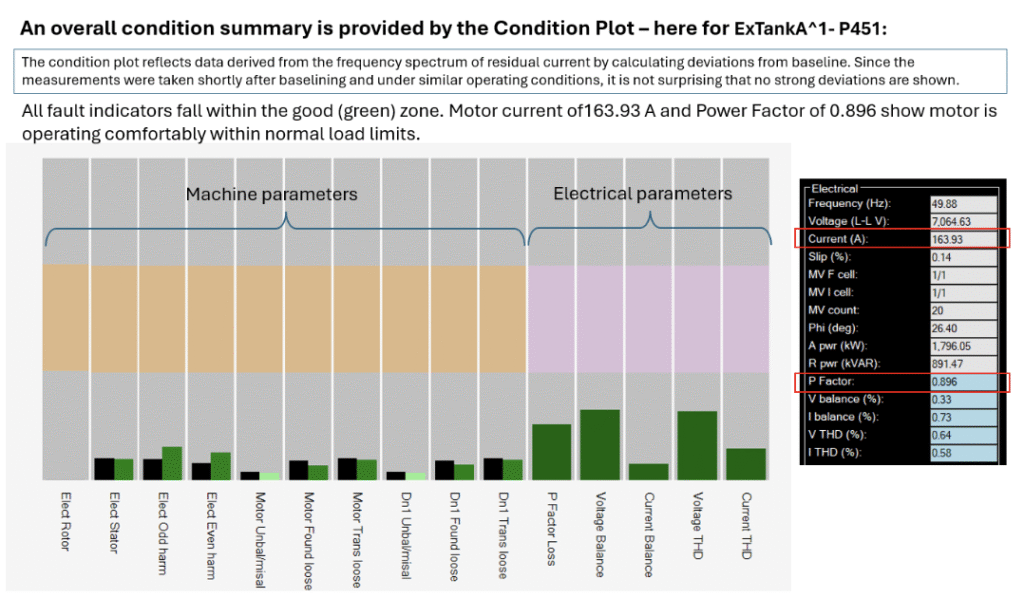
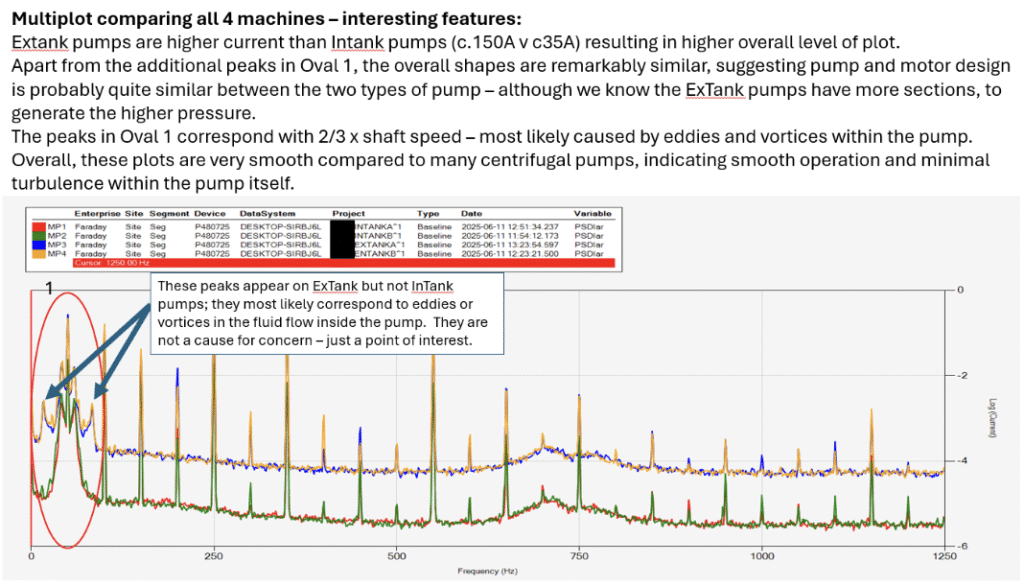
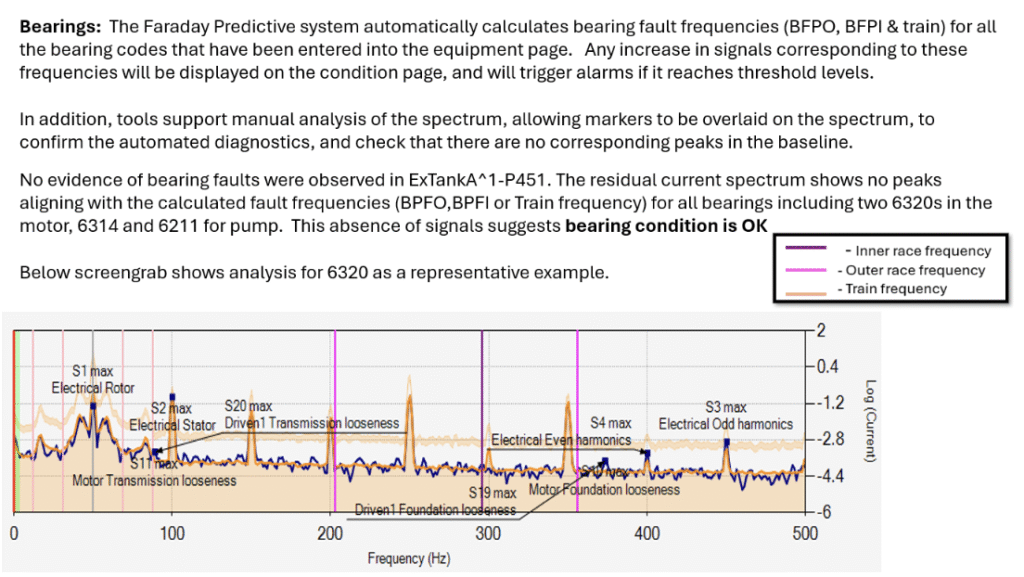
Below are some excerpts from the overview report, highlighting example outputs and findings:

The customer was delighted with the breadth and quality of insights provided by the system, leading to the rollout of permanent monitoring units (S200s) across their pump fleet.

We’d be happy to help you achieve the same level of operational visibility – get in touch to learn more.

Your trusted UK condition monitoring equipment supplier

1

 ISO 9001 certified

2

UK-based support

3

Proven track record